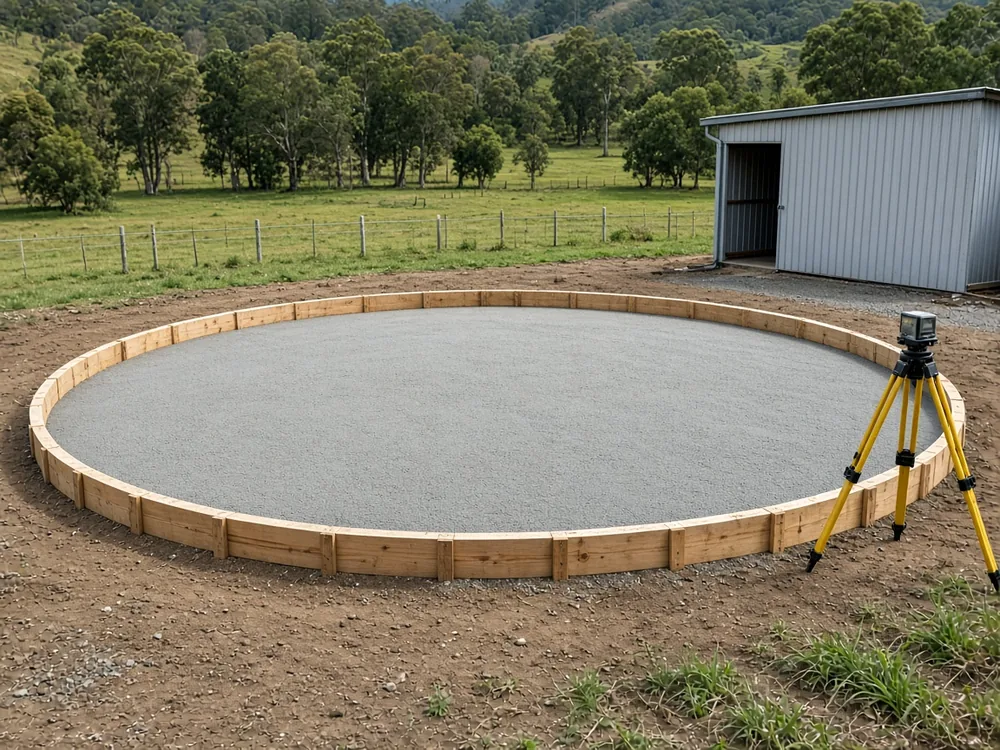
A level base is everything
A full tank is extremely heavy, so the base has to be level, compacted and sized to the tank manufacturer’s specifications. Crusher dust pads suit most poly tanks; some steel and larger tanks call for a concrete slab or ring beam. Check the tank warranty’s base requirements before the pad goes down.
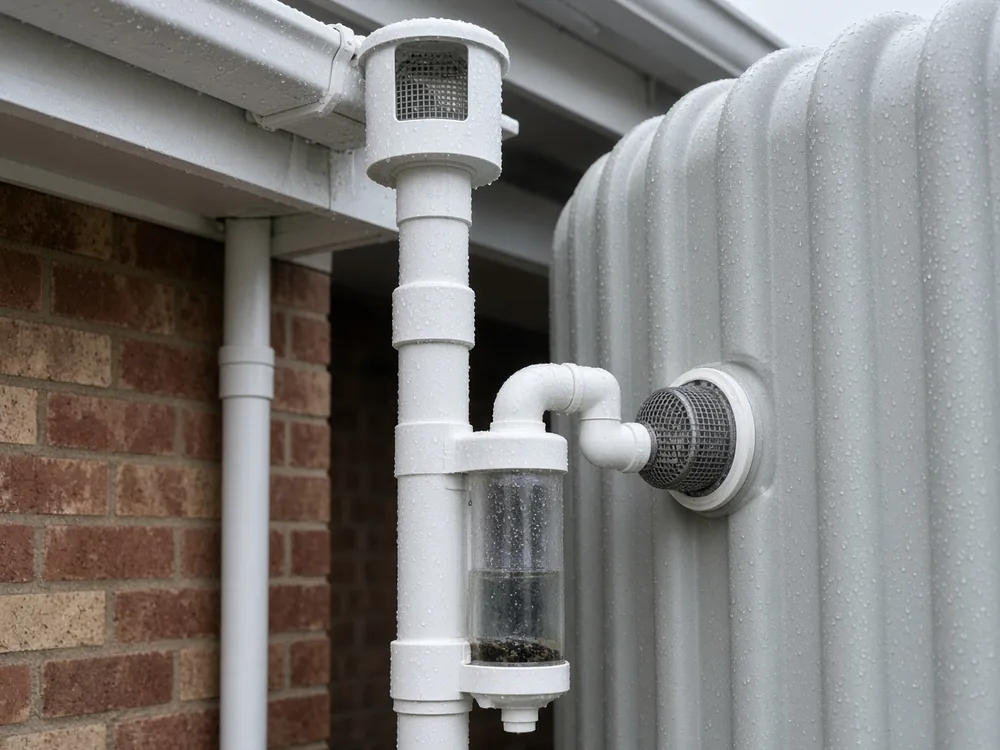
Keeping debris out
- ✓Gutter guards or leaf screens
- ✓Rain heads on downpipes
- ✓First-flush diverters to dump the dirtiest first water
- ✓Insect-proof screens on inlets and overflows
Tank cleaning
Over time, sediment builds up on the tank floor. Vacuum sludge extraction can remove it without draining the tank. Ask the cleaner how they handle confined-space safety; some cleans are done without anyone entering the tank.
Highlands conditions to plan for
Cold winters mean exposed pumps and pipework need frost protection. Many properties are mapped as bushfire prone, which can affect tank material and outlets. And a full tank is very heavy, so the base needs to be level and compacted. More on rainwater tanks in the Southern Highlands.
Frequently Asked Questions
How often should a rainwater tank be cleaned?+
It depends on your roof, trees and screening. Many owners check sludge levels every few years. A cleaner can inspect it and advise.
Can I put a tank straight on the ground?+
Not usually. Most manufacturers specify a level, compacted base free of rocks and roots. Check your tank’s warranty conditions.
How Highlands Tank Pros works
Highlands Tank Pros is a local lead-matching service connecting Southern Highlands property owners with independent, licensed plumbers and rainwater tank installers. When you call or send a request, we pass your details to a local installer who contacts you to quote. The installer you’re matched with is responsible for the work, its pricing and any warranties.