Why go underground
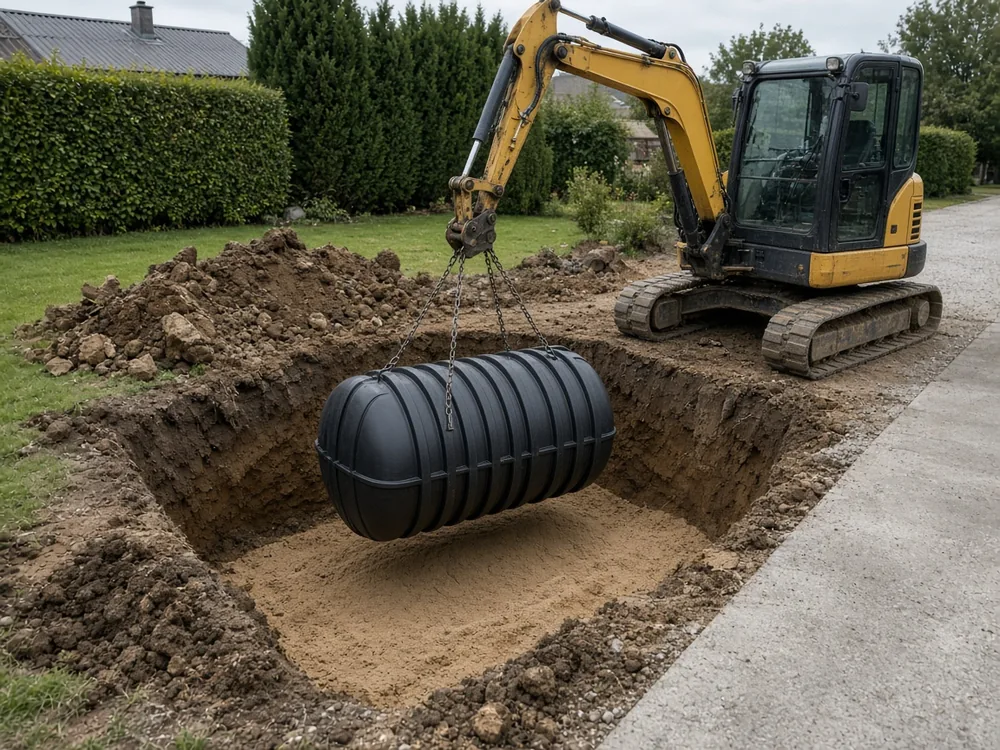
An underground tank keeps your garden and street view clear, which is why it’s popular on established gardens and heritage-character blocks. Underground tanks are also an option for a dedicated fire-fighting supply on bushfire-prone land, subject to your consent conditions.
What the job involves
- ✓Checking access for the excavator and delivery truck
- ✓Locating underground services before digging
- ✓Excavation, bedding and backfill to the tank manufacturer’s specifications
- ✓Choosing a trafficable tank if it will go under a driveway
- ✓Pump, plumbing and overflow connections by a licensed plumber
- ✓Reinstating lawn, paving or driveway
Approvals
Many above-ground rainwater tanks can go in as exempt development in NSW if they meet the set conditions (such as size, height and setbacks). Larger tanks, underground tanks or properties with heritage or other constraints may need approval, so check with Wingecarribee Shire Council or your certifier before work starts.
Highlands conditions to plan for
Cold winters mean exposed pumps and pipework need frost protection. Many properties are mapped as bushfire prone, which can affect tank material and outlets. And a full tank is very heavy, so the base needs to be level and compacted. More on rainwater tanks in the Southern Highlands.
Frequently Asked Questions
Can an underground tank go under my driveway?+
Yes, if it’s a trafficable tank rated for the load and installed to the manufacturer’s specifications. Mention vehicles when you request a quote.
Can an underground tank be used for fire-fighting water?+
It can. NSW RFS guidelines call for underground fire-fighting tanks to have a 200mm access hole so a tanker can draw from it, plus a hardened surface within 4 m. Check your consent conditions with your certifier or NSW RFS.
How Highlands Tank Pros works
Highlands Tank Pros is a local lead-matching service connecting Southern Highlands property owners with independent, licensed plumbers and rainwater tank installers. When you call or send a request, we pass your details to a local installer who contacts you to quote. The installer you’re matched with is responsible for the work, its pricing and any warranties.